


Hazardous Waste Disposal & Solid Waste Management in Yemen

Updated: May 31
The Applicable Environmental Legal Framework — A Practitioner's Guide
About this finding: This finding is a summary of a regulatory advisory assignment undertaken by CORAL Environmental Services at the request of an Oil & Gas Production Block Operator in Hadramout Governorate, Yemen. The operator required a clear understanding of the Yemeni environmental legislation, by-laws, and government procedures applicable to the siting Hazardous Waste Disposal & Solid Waste Management in Yemen. The material below distils that regulatory framework into an accessible English-language reference, since no authenticated official English translation of these laws exists.
Yemen has enacted a substantial body of laws, Republican Resolutions, by-laws, and regulations governing — directly or indirectly — the conservation of the environment and natural resources. Yet a persistent practical obstacle remains: no authenticated English translation of these instruments exists. For international operators, lenders, and consultants working in Yemen, this language gap creates real compliance risk. This assignment sets out, in accessible English, the applicable environmental requirements governing the disposal of hazardous waste and the management of solid waste in Yemen.
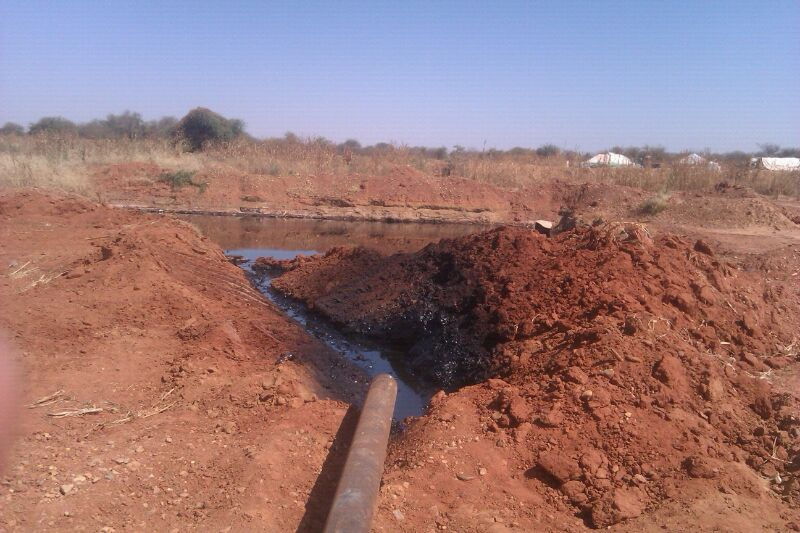
The two foundational instruments are the Environmental Protection Law No. 26 of 1995 (EPL) and its implementing Prime Minister's Resolution No. 148 of 2000 (PMR). Together they form the legal backbone for the handling, storage, transport, treatment, and disposal of hazardous and toxic materials throughout the Republic of Yemen.
Part 1 — How Yemeni Law Defines the Problem
Sound regulation begins with clear definitions, and the EPL is careful here. Under Part 1, Chapter 1, Article 2, the law establishes three interlocking concepts:
Hazardous materials are substances of high toxicity or radioactivity, or those capable of explosion or corrosion, that pose harm to humans, living organisms, or the environment.
Hazardous wastes are wastes generated by industrial, chemical, or radioactive processes that are dangerous — whether by their composition, concentration, chemical reactivity, toxicity, explosive or corrosive potential, or other properties — to human, animal, or plant life, either alone or upon contact with other wastes.
Toxic substances are those that, on entering the environment in sufficient quantity or concentration, damage the natural environment necessary for human and other life, whether the effect is immediate or long-term.
Crucially, the law defines "handling" to span the entire life cycle of a waste: from the moment of generation through collection, storage, transportation, treatment, disposal, or recycling — including the long-term stewardship of dumping and burial sites. This cradle-to-grave scope is the single most important principle for any operator to grasp: legal responsibility does not end at the point of disposal.
Part 2 — The Core Regulatory Architecture (EPL Part 3, Chapter 4)
Part 3 of the EPL regulates activities harmful to the environment across six chapters. Chapter 4 — Articles 44 to 55 — is the heart of the hazardous waste regime. The following summarises the obligations that matter most in practice.
Licensing is mandatory (Article 44). No hazardous, toxic, or potentially hazardous substance may be handled without prior license from the competent authority. The Environment Protection Authority (EPA), in consultation with specialised scientific agencies, maintains an official "list of hazardous or toxic substances," updated by Cabinet decree as science and technology advance. International references — both governmental and non-governmental — may inform the list.
The list is open to petition (Articles 45–46). Any natural or legal person may apply in writing to add a substance to the list, with reasons. To evaluate hazard or toxicity, the competent authority may compel any public or private body to supply information on a substance's nature, composition, quantities, and uses, verified through official laboratories.
Cabinet decrees set the controls (Article 47). When a substance is added to the list, the Cabinet specifies the applicable measures — which may include partial or total prohibition of import, manufacture, use, sale, distribution, or handling; licensing conditions; permissible disposal quantities and concentrations; methods, conditions, and locations of disposal; storage and transport conditions; and packaging and labelling requirements.
Duty to disclose (Articles 48–49). Any licensee must notify the competent authority of all information indicating that a substance is hazardous or toxic. The authority, in turn, must issue regulations covering disclosure schedules, responsible persons, permissible handling limits, hazard-evaluation methods, and the laboratories authorised to determine toxicity.
The cornerstone prohibition (Article 50). No person or body may release hazardous, toxic, or potentially hazardous substances into the environment. Where a release occurs, the responsible party must take all necessary measures to prevent or minimise harm and must notify the competent authority. If they fail to act, the EPA may intervene directly — and recover the full cost from the polluter. This is Yemen's embodiment of the polluter-pays principle.
Cost recovery and state liability (Article 51). While the state may bear the immediate direct or indirect costs of remediation, the competent authority is empowered to recover those costs from non-compliant parties administratively or through the courts.
Confidentiality and investment screening (Article 52). Information providers may request confidentiality. More significantly, this Article obliges all licensing agencies not to approve projects or investments that harm the environment or increase pollution, and requires environmental protection conditions to be embedded in all contracts with national and foreign investors.
Absolute prohibitions (Articles 53–54). It is categorically forbidden to import, bury, dump, or store hazardous, toxic, or radioactive substances anywhere in the Yemeni environment. Ships, aircraft, and other carriers may not enter Yemeni waters, land at its airports, or transit its territory carrying such wastes — except under international agreement and with prior Cabinet permission approved by Parliament.
Solid waste and general cleanliness (Article 55). The competent authority must assess the status of general cleanliness and the dangers posed by garbage, sewage, and solid and liquid wastes. In coordination with the EPA, it must determine landfill sites; the methods and conditions for disposing of, burying, or transporting wastes; and any further measures needed to prevent harm.
Part 3 — Environment and Development (Articles 56–57)
Part 5 of the EPL links environmental protection to economic development. Article 57 carries particular weight for the petroleum sector: it obliges the Ministry of Oil and Mineral Resources and relevant public institutions to embed environmental protection conditions in every oil contract with national and foreign companies licensed to explore, drill, or exploit oil fields and mineral resources. These contracts must mandate safe methods, specify penalties, and require operators to pay for the removal of environmental damage and associated compensation.
Part 4 — Environmental Monitoring (Articles 58–61)
Chapter 6 of the EPL establishes the framework for environmental monitoring networks, created by the EPA in collaboration with specialised agencies. Significantly, it grants the EPA authority to compel project owners to install and operate equipment that monitors the indicators and specifications of the wastes and pollutants their activities produce — shifting part of the monitoring burden onto the generator.
Part 5 — The Implementing Regulations (PMR 148/2000)
Where the EPL sets principle, the PMR sets procedure. Chapter 2 of Part 2 (Articles 12–27) elaborates the hazardous substance and waste provisions, translating the law's broad obligations into operational requirements.
Annex 3 is the operational core. Its first section lists hazardous substances and wastes that may not be transported or handled without explicit permission. Under Article 14, the competent authority may not issue a handling permit for these substances without first consulting the EPA and obtaining its prior consent. For wastes listed in Section 2 of Annex 3, Article 13 permits handling only under controls established by the responsible Ministry in coordination with the EPA — including the proper disposal of emptied packaging.
Article 14 further specifies the contents of a handling-permit application and the written commitments an applicant must provide. It vests the EPA and the licensing authority with the right to monitor — permanently and routinely — any installation that produces or handles such wastes, together with its storage and transport arrangements. The producer must take every precaution to ensure no environmental harm occurs. Where a licensee (or anyone under their authority) violates these conditions, the license may be withdrawn — without prejudice to compensation claims pursued through the courts.
Article 17 sets out the specific precautions that bodies producing or handling hazardous substances and wastes must observe in practice.
Why This Matters for Operators and Investors
For any industrial, petroleum, or infrastructure project in Yemen, three practical conclusions follow from this framework:
Compliance is cradle-to-grave. Responsibility for a hazardous waste begins at generation and does not end at disposal. Documentation, chain-of-custody, and site stewardship are legal obligations, not best-practice options.
The polluter pays — enforceably. Articles 50 and 51 give the state clear cost-recovery powers. The financial exposure from a release extends well beyond clean-up to compensation and penalties.
Environmental conditions are contractual. Articles 52 and 57 mean environmental protection clauses are not optional add-ons but mandatory contract terms, particularly in the oil and mineral sectors.
For international lenders applying World Bank and IFC environmental and social standards, the encouraging conclusion is that Yemen's domestic framework is broadly congruent with international expectations on hazardous waste management — the gap lies in implementation capacity and the absence of accessible translations, not in the law itself.
Conclusion
Yemen possesses a comprehensive, principle-based legal framework for hazardous and solid waste management, anchored in the EPL (26/1995) and operationalized through the PMR (148/2000). The framework embraces clear definitions, mandatory licensing, the polluter-pays principle, absolute import and dumping prohibitions, and contractual environmental safeguards. The central challenge is not legislative but practical: enforcement, monitoring capacity, and the accessibility of these instruments to the operators and investors bound by them. Bridging that gap — through accurate interpretation and disciplined compliance management — is precisely where structured environmental advisory adds value.
Legal References
Republic of Yemen, Environmental Protection Law No. 26 of 1995 (EPL). Republic of Yemen, Prime Minister's Resolution No. 148 of 2000 (PMR) — Implementing Regulations of the EPL, Annex 3.
Disclaimer: This assignment is a practitioner's interpretation of Yemeni environmental legislation prepared for formal advisory to an Oil & Gas Production Block Operator in Hadramout Governorate, Yemen. No authenticated official English translation of the EPL or PMR exists; in case of discrepancy, the original Arabic text prevails. This finding does not constitute legal advice.
REFERENCES
1. Environmental Protection Law No. (26), Republic of Yemen Council of Ministers, (2003).
2. World Bank Guidelines for Environmental Assessments, 1993.
3. IFC Guidelines for Environmental Assessment, 2003.
4. Procedure for the Environmental and Social Review of Projects, International Finance Corporation, 1998. provisions of the law.
Comments